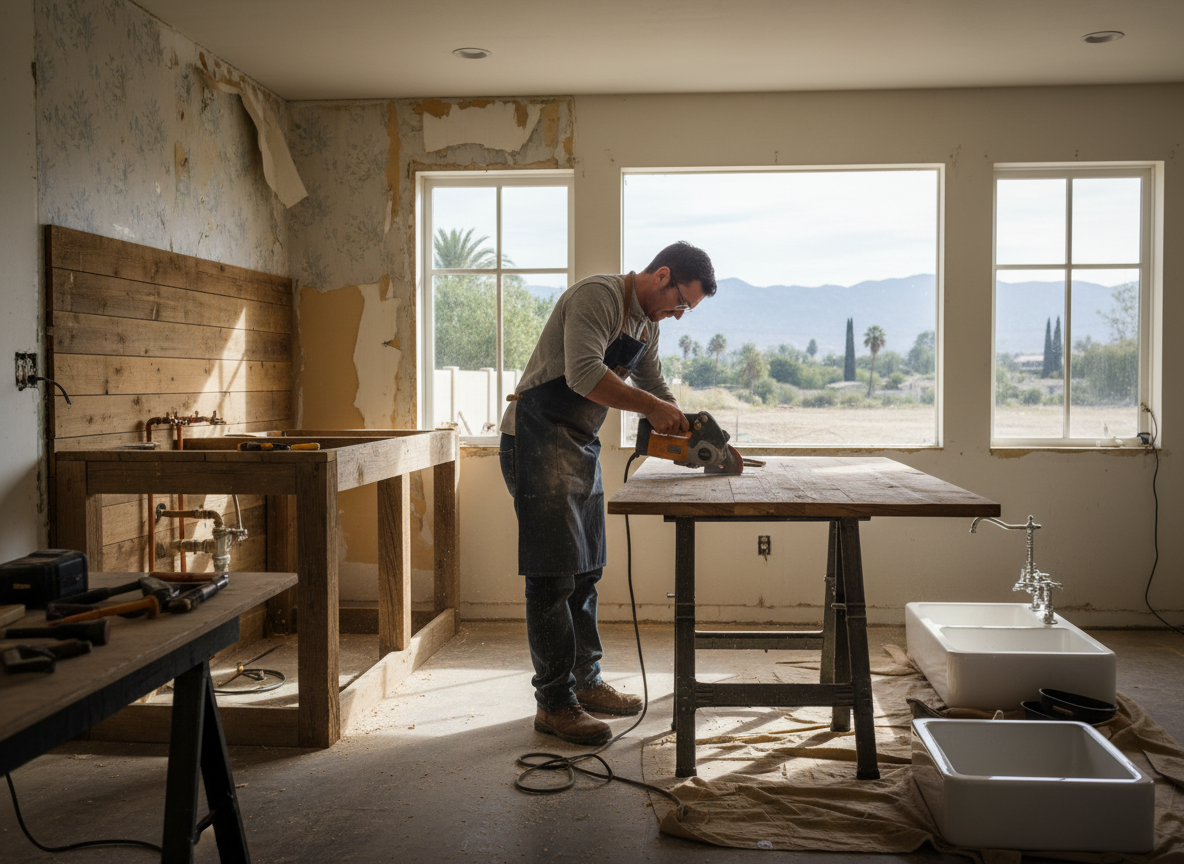
Farmhouse kitchens in Glendale often start with 1960s-1980s tract homes in Arrowhead or near Luke Air Force Base that have narrow galley layouts and limited natural light. We open walls to create the signature open shelving and apron sink focal points while reinforcing joists to handle the added weight of reclaimed wood or butcher block. The hot desert climate means we avoid solid-wood cabinet doors that expand and contract dramatically between 115-degree summer days and mild winter nights, opting instead for stable plywood boxes with applied farmhouse trim.
Maricopa County permitting for structural changes in Historic Downtown Glendale homes requires careful coordination because many properties sit on older slab foundations that shift slightly with seasonal soil movement. We route plumbing for deep farmhouse sinks and prep islands without disturbing existing gas lines common in Peoria-adjacent neighborhoods. Electrical updates always include dedicated circuits for high-draw appliances, since summer air-conditioning loads already push many panels near capacity.
Ventilation is critical here. Range hoods must exhaust directly outside rather than recirculate because the dry desert air quickly carries cooking grease and moisture into adjacent living spaces. We integrate the hood into the range alcove so it maintains the farmhouse aesthetic while meeting code airflow requirements that inspectors enforce strictly in new remodels near State Farm Stadium.
Countertop choices shift with local realities. Honed granite or quartzite holds up better than softer materials when homeowners entertain outdoors and track in abrasive desert dust. We seal all porous surfaces twice before turnover because the first monsoon dust storms arrive quickly after summer remodels finish.
Technician insight
In Glendale the thing that catches most people out with Farmhouse Kitchen Remodel is how the extreme attic heat warps solid-wood open shelving within the first summer if you don't use plywood cores and proper sealing. Homes near the base or in Arrowhead also tend to have shallow electrical panels that can't handle both new lighting and an induction range without a subpanel upgrade.
Arrowhead Farmhouse Update
A 1978 Arrowhead home had a cramped kitchen with failing laminate counters and no island. We discovered the slab had minor seasonal movement typical of Maricopa soil. We reinforced the floor, installed a large apron sink with stable cabinetry, and added a range hood that exhausted properly through the roof. The finished space now handles summer heat without finish failure.
How it works
- 1
Site Assessment
Measure existing layout, inspect slab and electrical service, and note sun exposure on south-facing walls common in Glendale tract homes.
- 2
Design and Material Selection
Select stable cabinet boxes, apron sink placement, and open shelving that withstands 110-plus degree attic temperatures.
- 3
Demolition and Rough-In
Remove old cabinets and walls, reroute plumbing and electrical, and reinforce floor framing for island weight.
- 4
Installation and Finishing
Set cabinetry, install countertops and backsplash, then apply final trim and hardware suited to dry desert conditions.
- 5
Final Inspection and Turnover
Walk through with homeowner, confirm ventilation and lighting function, and review care instructions for heat-exposed finishes.
Pricing
Pricing varies by scope; most Glendale farmhouse remodels fall between mid-range and premium depending on material choices and whether structural changes are needed.