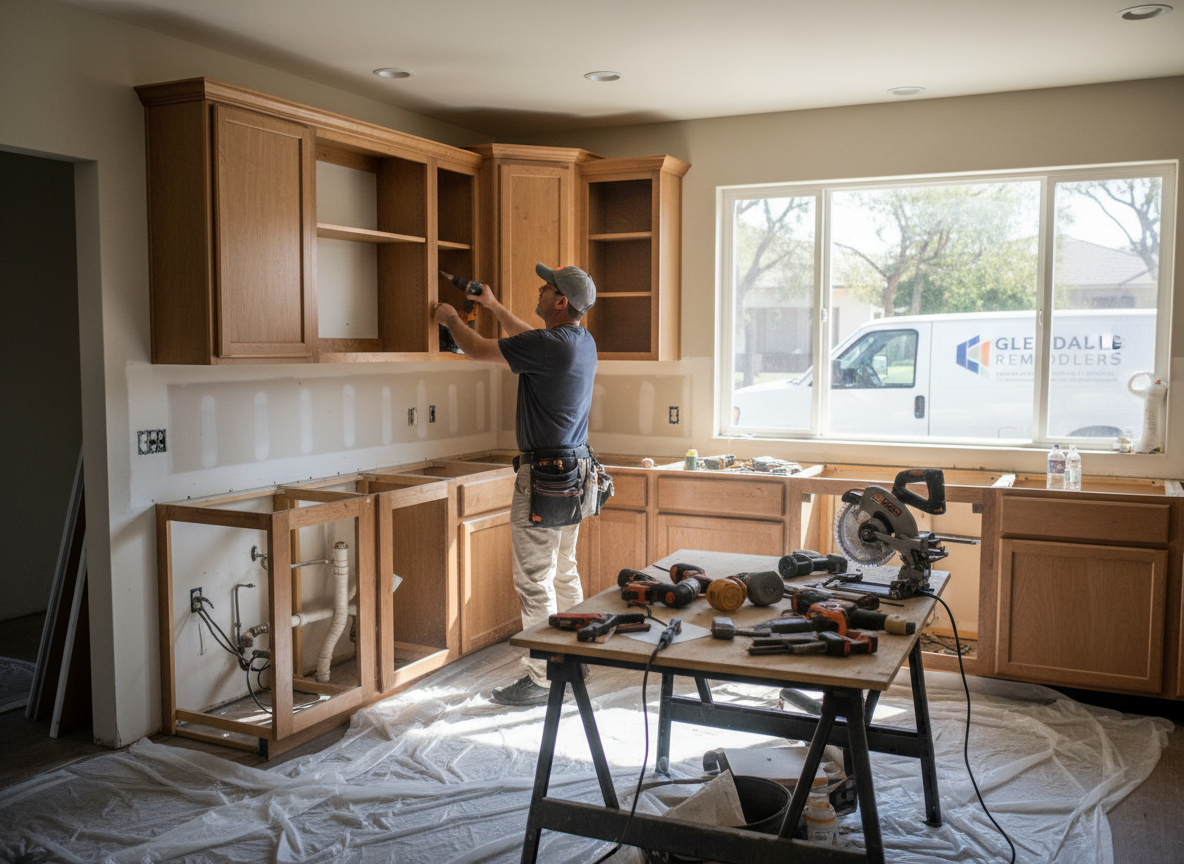
Glendale homes in Historic Downtown often date from the mid-20th century with narrower layouts and limited electrical service that must be upgraded during a kitchen remodel. Phoenix and Peoria crews regularly encounter knob-and-tube wiring or undersized panels when opening walls, requiring coordination with Maricopa County permitting to meet current codes. Desert heat accelerates material expansion, so we specify cabinets and countertops with proper expansion joints and UV-stable finishes to prevent warping near south-facing windows.
Arrowhead and Luke Air Force Base area neighborhoods feature 1980s-2000s tract homes with open floor plans that still need better ventilation and insulation when adding islands or relocating sinks. Summer temperatures above 110 degrees make dust control critical; we seal work zones tightly and schedule heavy demolition for early morning hours to protect existing HVAC systems. Mild winters allow year-round exterior work, yet monsoon moisture demands moisture barriers under new flooring to avoid future cupping.
State Farm Stadium and Desert Diamond Casino traffic patterns affect delivery timing for large appliances, so we stage materials at our 5830 W Thunderbird Rd Suite B9 location and schedule just-in-time drops. Water hardness common in Glendale requires specific faucet and dishwasher selections to reduce mineral buildup. Owner-operated crews provide 24/7 scheduling for occupied homes so families near Peoria can maintain routines during multi-week projects.
Technician insight
In Glendale the thing that catches most people out with Local Kitchen Remodeler is underestimating how desert dust and 110-degree summers affect cabinet finishes and electrical loads in 1970s-1990s Arrowhead homes; skipping proper sealing or panel upgrades leads to callbacks within two seasons.
Historic Downtown Kitchen Update
Homeowners in a 1960s Glendale bungalow needed more counter space but faced outdated wiring. We discovered shared circuits feeding both the range and AC unit. After pulling permits we rerouted dedicated lines, installed heat-rated cabinetry, and added ventilation to handle summer cooking loads, resulting in a layout that stays cooler and meets current Maricopa County standards.
How it works
- 1
Site Assessment
Measure the existing kitchen, note electrical and plumbing locations, and evaluate sun exposure and dust infiltration points typical in Glendale.
- 2
Design and Material Selection
Review layout options that fit older home footprints while choosing finishes rated for extreme heat and low humidity.
- 3
Permitting and Prep
Submit plans to Maricopa County, protect adjacent living spaces from construction dust, and stage materials to avoid midday heat.
- 4
Installation and Final Walkthrough
Complete cabinetry, countertops, and appliances with expansion allowances, then test all systems and review maintenance steps for desert conditions.
Pricing
Upfront quotes reflect scope, material choices, and site-specific factors such as electrical upgrades common in older Glendale homes.